
Gari Melchers Home and Studio at Belmont gets attention not only for the art that hangs inside, but also for the natural beauty of the estate outside. In August, public television’s Virginia Home Grown featured the work of Beate Jensen ’99, who supervises the preservation of landscape, grounds, and buildings on the 28-acre historic property in Falmouth, Va.
Since graduating, Jensen has used her University of Mary Washington historic preservation degree to help fulfill Corinne Melchers’ wish that Belmont become a memorial to her husband, artist Gari Melchers, and a park where the public enjoys nature. The grounds are open to the public without charge during business hours.
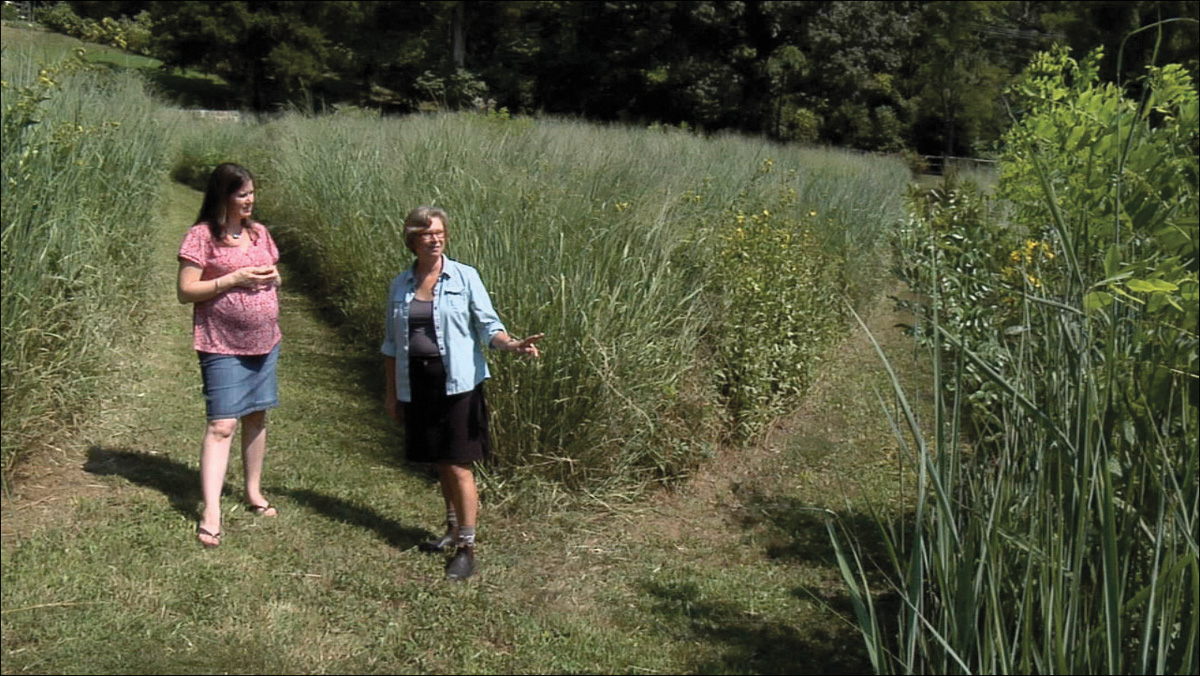
Amy Barton Williams (left) of Virginia Home Grown interviews Beate Jensen ’99 about the native grass meadows Jensen established at Belmont. WCVE PBS, Virginia Home Grown
In 2000, Jensen made a bold move − she converted three acres of traditional, closely trimmed fescue and bluegrass lawn to towering native grasses. Today, Belmont boasts acres of fully established low-maintenance native meadow.
Last summer, Virginia Home Grown host Amy Barton Williams headed up I-95 from the gardening-and-conservation show’s studio at WCVE PBS in Richmond to find out more.
Belmont’s meadows teem with birds, mammals, and butterflies, Jensen said. She leaves the grasses standing in winter, so animals forage for seed heads and find shelter from predators and harsh weather.
Jensen also maintains Belmont’s formal gardens − boxwood, heritage roses, annuals, and perennials − around the historic home. She and her tiny staff have worked to clear the estate’s nearly 10 wooded acres of invasive plants and to establish paths so visitors can more easily enjoy the forests and access the adjacent Rappahannock River.
The native meadow means less mowing and provides extensive wildlife habitats. And with open, meandering paths that tunnel through Indian grass, switch grass, and bluestems − some towering more than 10 feet high − it’s a restorative place for humans.
“It makes me feel like a kid walking through here with the grasses over my head,” Jensen said.